
"Hey editor…"
According to communications professional Dawn Brand Fluhler, that probably isn’t how you want to begin reaching out to media.
During our recent Intersessions, News Releases: Earned Media Starts Here, Dawn walked attendees through one of the most common frustrations organizations face. They spend time writing a news release, hitting send, and hearing absolutely nothing back.
That silence can feel personal. You have an event to promote, a story worth sharing, or exciting news to announce, and suddenly it feels like your email disappeared into a black hole.
But Dawn offered a reassuring perspective. "The problem is not you. The problem is the content in your news release."
Writing a stronger release doesn't require becoming a journalist overnight. It starts with understanding how editors think and what makes a story worth sharing in the first place.
Before You Write, Ask: Is This Actually News?
One of the biggest mistakes organizations make happens before they even type a headline. Not every announcement needs a news release.
Media outlets aren't looking for free advertisements disguised as stories. They're looking for information their audience will find relevant, interesting, useful, or meaningful. If your content doesn't meet that threshold, Dawn suggested there may be better routes to take, whether that's a social media post or another communications tactic.
So, what makes something newsworthy? Timing, what impact something is bringing, and human stories matter.
An event happening tomorrow doesn't help much if readers only learn about it after it's over. A national story may not resonate with a local audience if there isn't a community connection. Sometimes the most compelling stories aren't the biggest ones at all; they're simply stories people connect with emotionally.
Dawn shared examples from her own experience where simple moments unexpectedly gained traction. A social media post about a hospital employee finding a lost wedding ring diamond years later eventually expanded far beyond its original audience. Another lighthearted story about a hospital elf traveling through departments became a front-page feature.
Neither started as a formal media pitch.
The lesson wasn't to chase viral moments. It was to recognize that people respond to stories that feel real.
Start Thinking Like an Editor
A news release is not marketing copy.
Many organizations instinctively want to sell, persuade, or add extra promotional language when writing about themselves. But editors aren't searching for exaggerated claims or buzzwords. They're searching for stories they can quickly understand and easily share.
Dawn put it simply: "Write it like it'll be printed."
Her goal when writing a release is what she described as "copy, paste, publish."
Put yourself in an editor’s shoes. They may be reviewing dozens—sometimes hundreds—of submissions in a day. If they have to spend extra time digging through information, reorganizing content, or figuring out why a story is relevant, they'll often move on.
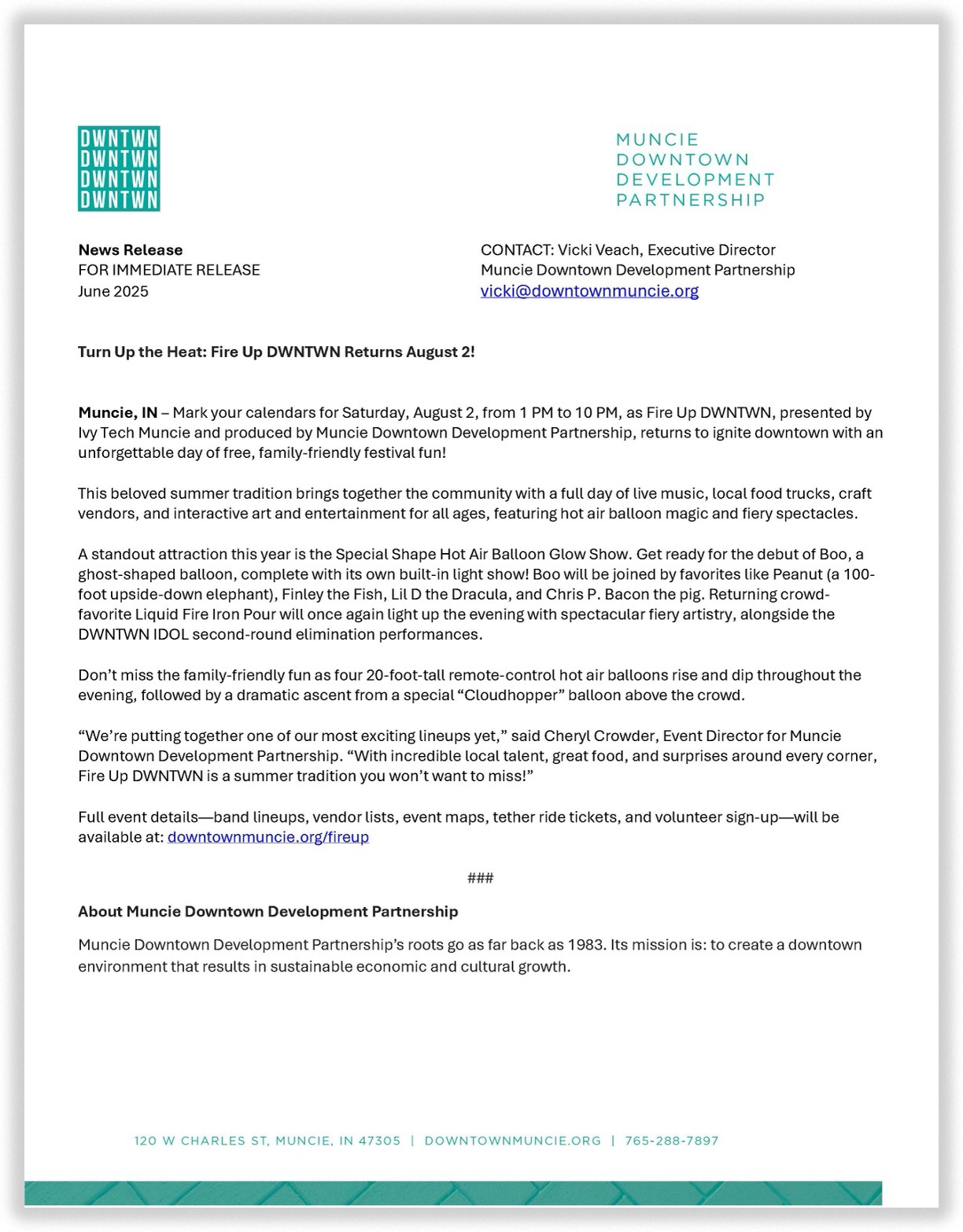
Strong releases make their jobs easier. That starts with a lead paragraph that quickly answers the essential questions: Who? What? When? Where? Why does this matter? All within just a few sentences.
Supporting details can follow, but readers and editors should understand the story almost immediately.
Example:
The Best Headlines
It's tempting to create a witty headline that sounds like a campaign slogan.
Dawn encouraged a different approach. Clear beats clever.
Your headline should immediately communicate the story and why someone should care. The same principle applies throughout the release itself. Keep sentences concise. Remove unnecessary industry jargon. Resist the urge to over-explain.
If readers have to work too hard to understand what you're saying, you've already made the process more difficult than it needs to be.
Make Your Story Human
Somewhere along the way, many news releases developed a reputation for sounding robotic.
You've probably read them:
XYZ Corporation is pleased to announce...
Organization remains committed to...
New program demonstrates...
The problem is that people don't naturally talk like that.
Quotes, Dawn explained, are an opportunity to interrupt the rhythm of the story and let readers hear an actual voice.
"Quotes stop the reader."
Good quotes shouldn't repeat information that's already been stated. They should add perspective, emotion, or context. They should sound like something a person would say out loud.
That human element often becomes the difference between a forgettable announcement and a memorable story.
Getting Picked Up Starts Before You Hit Send
Relationships matter just as much as strong writing.
Dawn encouraged attendees to get familiar with local reporters and editors before they need something. Attend networking opportunities. Introduce yourself. Learn who covers topics related to your organization.
The goal is to build familiarity and trust. When a recognizable name lands in someone's inbox, there's a better chance they'll pause long enough to read it.
And once you do send a release, make it easy for media to work with you. Include supporting photos. Provide captions. Respond quickly if questions come in.
The easier you are to work with, the more likely they'll come back next time.
Earned Media Is More Than Free Exposure
Many people hear "earned media" and immediately think: free publicity.
But its value goes much deeper.
A news story carries a different level of credibility than an advertisement because someone else deemed it worth sharing. That credibility can then extend beyond the original placement through social media shares, website traffic, and additional conversations.
One successful story often creates momentum for another.
Organizations continue to invest time into public relations efforts because the value is building trust. And as Dawn reminded attendees throughout the session, none of it starts with writing more words. It starts with writing the right ones.
Want to hear more great tips from the session? You can watch the full recap
You can also RSVP to our next session on July 28 where we’ll discuss sales vs. marketing.